I met with the dietitian Alanna Doran to gain further education on fast foods impact to peoples bodies. Although she works with elderly people she still understands how the brain and body react to certain foods. I asked her if she has ever seen a behavioural change in people when they choose to eat healthier and she right away said, patients who begin eating a healthier, balanced diet decrease their stress rates and depression. I then asked her opinions on fast food, Alanna mentioned fast food is okay once or twice a week with balance. This meaning if you eat it everyday and don’t workout, it wont do you any good. If you eat it on the way home after a workout once a week then it won’t do you any harm. Fast food includes empty calories meaning yes you are eating over 2000 calories worth of fast food a day, but there are no nutrients in these calories to give your body the fuel it needs. When your body has too many calories with no nutrients in it then too mcuh synapses is being produced meaning your neurotransmitters will interfere. Neurotransmitters are in charge of how you body reacts, they are what send your brain the signal to release dopamine (happy chemically), serotonin (calm chemical) or tryptophan (sad chemical). Next I asked if she felt fast food was taking over todays society with advertisements. She said yes they are advertising fast food a lot more although it’s the healthier options they carry. This lead to another conversation on how they false advertise healthy options when they still aren’t even healthy or beneficial to our bodies. The most interesting thing she said was how people choose fast food because it tastes good, even if they get sick they go back because it tastes good, your body craves it because it tastes good. Fast food will be one of the hardest things to get away from because it tastes good and it takes a lot of will power to avoid this food.
My Survey Results
I created a survey for people in my community on their mental health and fast food consumption. Below I included the charts for visual representations. I noticed that the people being surveyors actually ate a balanced amount of fast food meaning this surveyor may not be complex on my side of research. It did show that people choose to eat fast food because it tastes good, as they eat it it makes them happy but afterwards makes them feel sick and guilty. This is where I began questioning why anyone would go back to eating these foods if it just makes them sick and guilty feeling afterwards. After the survey went online I even had few friends come up to me saying “I just went to McDonalds and had a wrap, oh my do I ever feel sick” this kept occurring as the my project advanced. People were becoming more aware of how they truly felt after eating these foods. I do believe that the results of my survey prove fast food can alter a persons emotions although it does not directly prove fast food can cause the mental illness.


Diseases and Illnesses
Obesity is an epidemic on the rise. Every 2 of 3 adults are obese and 1 of 3 will have diabetes. For each 50gram portion of processed meat daily, increases the risk of colorectal cancer by 18% and the risk of diabetes by 51%. Physical health is important to live a sustainable life pain free and eating unnatural, processed foods is not the answer.
The main cause of diabetes is not sugar as many people like to believe. Believe it or not diabetes actually comes from fatty meat proteins. This is because our bodies are not built to digest meat proteins and too much can cause life threatening illnesses. Animal proteins in large amounts harm our bodies. It is proven that 1 egg daily is equivalent to 5 cigarettes because they are both at the top of the charts when it comes to our health. Most of our population dies from cardiovascular diseases caused by obesity. Imagine four large jets crashing every hour everyday every year, that is how many people die from these diseases. Researches have found evidence that plant based diet can reverse health diseases and prevent them; so why are our doctors not telling us this? The government tells us we need dairy and animal proteins so that farmers get money. Fast food chains are owned by the government, since the government spends money on ads they need to make sure we know it is ‘good’ so they earn more money than spent. Meat and dairy companies spend $557 million on promotion and $138 on lobbying. If the government and doctors stopped manipulating their patients symptoms to be guaranteed ‘sick’ then our $1.5 trillion industry treating heart disease, cancer and diabetes could save $48 billion.
Proteins do not need to come from animal meats, in fact all proteins are initially made from plants. Plants have the ability to take nitrogen from the air, break down the molecules and incorporate them into amino acids to create proteins. These proteins have a better, more nutritious effect on peoples bodies. Our closest relatives; chimpanzees, eat a 97% plant and 3% insect diet. A study proved that just 2 weeks of eating a plant based diet clears the body of early cancer cells. If that’s all it takes to prevent and reverse early cancer cells, why aren’t more people eating this way and why is almost no one informed? This goes back to government wanting money and being blindsided by the fact that they will make more money curing these diseasing then searching for a cure.
Advertisements

Children and teens are surrounded by fast food ads and cannot escape them. They are shown on TV, pop up on Instagram, twitter and the internet and not to mention they fill the billboards all over the country. 3 of every 4 food ads fall under the unhealthy category and they take up 50% of all the ad time on kids shows. Food advertisements increase morbidity, mortality and has substantial long term economic and social costs. As our economy progresses, these ads have been increasing persuading children and teens to make unhealthy choices leading our world to an obesity epidemic. After the age of 8, children have a remarkable ability to recall content from the ads to which they have been exposed to since they understand the persuasive intent of advertising. These ads often objectify girls and women which contributes to body dissatisfaction, eating disorders, low self esteem and depression. Many teenagers have body image issues causing them to go to the extremes to manage their weight. These behaviours put stress on people as they are always thinking about the calories they put into their bodies, the food they can’t eat and the four hour gym workout they have planned. As a result, their mental health gets shaken making this journey 10x harder and it all started with the advertisements.
Below is a chart with how many ads these ages watch per day and per year. This goes to show how unhealthy advertisements have taken over the television programs. These ads are a prominent aspect when the tv turns on and it makes people jump off the couch to go buy the new ‘in’ burger.
| Ages | Number of Ads/day | Hours of Ads/day | Number of Ads/year |
| 2-7 | 12 | 29m31s | 4427 |
| 8-12 | 21 | 50m48s | 7609 |
| 13-17 | 17 | 40m50s | 6098 |
Direct Link With Mental Health
When your body is being fueled with fast food it isn’t functioning at optimal capacity physically or mentally. As healthfully.com mentions, fast food contains an unhealthy mixture of fats, preservatives, coloring and refined carbohydrates causing an imbalance in your brain. In other words, the lack of nutrients in fast food causing an imbalance in your brain which then affects the mental health of consumers. Trans-fatty acids in these foods not only clog your arteries although they are a main culprit of depression. This is due to an imbalance of fatty acids that your body obtains after eating fast food. Ideally, people should consume a ratio no greater than nine parts omega 6 fatty acids to one part omega 3 fatty acids. Although one order of fries is equal to a 16:10 fatty acid ratio. As you can see from this comparison, fries (which are less calories than burgers and wraps) already surpass the ideal fatty acid ratio which proves the imbalance scientifically proven. Artificial colouring and preservatives like sodium benzoate are crucial ingredients in fast food that cause hyperactivity within consumers. Hyperactivity is when one finds it difficult to focus; some relate it to a sugar rush being jittery, hyper and irritable. Next time you go to get fast food before a sports game or a big test, think twice because your brain wont be in the right mindset to perform at the best of your abilities. As most fast food places sell burgers, wraps, chicken nuggets, fries and many desserts, the main products they sell are filled with refined carbohydrates. Now, you learned from my blog “The Basics of Healthy Eating’ that there are ‘good’ and ‘bad’ carbs and this is where the ‘bad’ carbs come into action. Refined carbs are manually processed by humans meaning they are not natural and unhealthy to our bodies. Alongside refined carbohydrates are refines sugars, an increase of these manipulated nutrients cause blood sugar fluctuations which can affect how much you worry; anxiety. Blood sugar fluctuations are technically the cause of this mental illness although if you follow the research, these fluctuations turn into hypoglycemia levels in ones body which starts the worrying process. As teens start noticing mental changes, they keep buying fast food for the dopamine kick which doesn’t last too long and worsens the mental illness until it is difficult to control.
Teens Brain on Fast Food
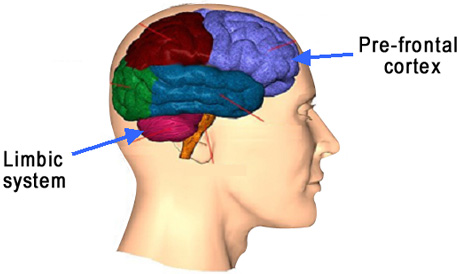
Have you ever thought about what happens inside your body and mind after eating something? Probably not unless you’re passionate for this area of work. This is why teenagers need to be aware of what happens inside their mind after they eat fast food. As we all know by now, teenagers are at a crucial period of their growth development mandating our decisions to be wiser. Here is how your brain acts on junk food:
There are two parts of your brain that mainly come into effect; pre-frontal cortex and limbic system. The prefrontal cortex is the last part of your brain to mature, which usually occurs in your early twenties. This part of the brain is what performs decision making and self control functions. Just this fact alone explains a lot as teenagers often act out and make rebellious decisions. Having less self control makes it harder for teenagers to resist those urges to binge on unhealthy foods. Since your brain automatically craves the fattiest, tastiest and sweetest foods, you will always be thinking about that McDonald’s burger you had a day ago, or the bag of gummy’s you ate at lunch. Most teens will eat fast food with a group of friends during lunch at school. I know personally, I hate fast food and always have, although as soon as I started going out for lunch with my friends I slowly started to order small portions of food. Having friends near you can influence your decisions when at a fast food restaurant causing you to over indulge.
A teenagers brain is at the peek level of its sensitivity to the rewards by having lots of receptors for the feel good chemical dopamine. This explaining why we automatically choose those fatty or sugary foods as it gets the biggest kick of dopamine. A repeated dopamine stimulation in your brain results in a long term sweet tooth; meaning once you have matured, your brain will encourage overindulgences to achieve the candy driven dopamine for the rest of your life. Teens need to be careful with how much fast food they consume to prevent this life long sweet tooth. If they aren’t aware of how often they indulge then obesity, heart disease and cardiovascular diseases can be seen in their future. Teenagers often find themselves binge eating a huge order at McDonalds because they are stressed or upset; this is because of the limbic system of your brain. This system controls your emotions and matures prior to the prefrontal cortex. As teenagers, we are full of hormones that can often be negative or stress related causing us to eat fatty and sweet foods as comfort. Like I mentioned before, our bodies want a reward and these ‘comfort’ foods will release dopamine causing you to become happier.
The Basics of Eating Healthy
How and what a teenager eats on a daily basis plays a dominant role to their metal health, brain/organ development and overall health in their future. Food is the most powerful thing in the world as it determines how one acts, reacts and grows whether they are a child, teenager, adult or elder. In order to properly function you should ensure that the foods you put into your body are filled with the nutrients required for a sustainable life. This should be enforced onto children and teenagers as they are in their prime growth time and proper nutrients are even more mandatory. On a daily basis, female teens should be eating 2200 calories and men 2800 calories. There is a 25% difference in calories between female and men due to the increase of vitamins and minerals men need. In todays day, teenagers do not get nearly enough calories in their daily lives due to the pressures of being thin or not fitting in. This is significant as teenagers are not obtaining the nutrients needed for proper growth and development. Once teens are finished growing, their hunger starts to slow down (with the exception of athletes) and they don’t need as many calories. This is when your metabolism begins to settle and you may not be able to eat pizza everyday, or maybe you are blessed with a fast metabolism until your fifties.
Now you may be wondering what nutrients are required for a sustainable diet. There are three main food groups I will talk about; carbohydrates, fats and proteins. Most people hear carbs and think they are bad for you although, there are two types of carbs; simple and complex. Simple carbs are broken down quickly by the body to be used as energy. These carbs are normally found in processed and refined sugars such as candy, table sugar, syrups and soft drinks. Complex carbs are the healthier option which take longer for your body to break them down. These carbs are often found in foods such as beans, whole grains and vegetables. Both simple and complex carbs are turned into blood sugar (glucose) in the body and then used as energy once digested. Teens should be eating 50-60% carbs in their diet and aim to digest more complex carbs then simple. Next is fat, there are good fats and bad fats typically known as monounsaturated, polyunsaturated and saturated. Monounsaturated fats are the healthiest fats which include; olives, olive oil, peanuts (oils and butters), cashews, walnuts (oil) and canola oil. Polyunsaturated fats are still good for you although in moderation, these include; corn oil, sunflower oil, soybean oil, and sesame seed oil. Saturated fats are mostly cholesterol laden which too much of can lead to plaque growing i and blocking arteries’ blood flow. Saturated fats are often found in meats; beef, pork, lamb and dairies; butter, cheese, cream and then egg yolks and coconut oils. In a sustainable diet, no more than 30% of what you eat should be fats as they supply energy and help digest fat soluble vitamins (A,D,E,K). Protein is the least of your worries when creating your diet as it is a temporary energy source. Take your body weight and divide by two, this is the amount of protein your body needs everyday in various forms such as; animal proteins, plant proteins, bean proteins etc.,. Included in protein are eight essential amino acids that your body needs to develop strong muscles and grow to your maximum. Lastly and most important are vitamins as they help nourish your body. Especially growing children and teenagers should focus on obtaining enough calcium and iron. Calcium is a need for our heart, muscles and nerves to function and prevent blood from clotting. While iron is needed as it is a significant component of hemoglobin, which is connected with red blood cells. Usually those who have a lack of red blood cells are anemic.
My Motivation
The topic of fast food and its impact on teenagers mental health is important to myself because I am interested in nutrition and how food can play a dominant role in how a person acts. Since teenagers are in their prime time of growth, maturation and figuring out who they are, I want to research with conflicting views of food consumption and how it affects this process by specifically causing mental health issues. I grew up in a family where my dads side eats out a lot, resulting in diabetes and obesity, while my moms side is the complete opposite. So personally I have been able to reflect on my mood changes between the different foods I fuel my body with. I now know that when I eat whole nutritious foods, not only do I have more energy, but I am happier and more social. When I eat more fast food I become sluggish, unmotivated and quite frankly, I become rude. Fast food causes weight gain and weight gain as we know is a major factor in mental health with influences being all over social media. So maybe the lack of nutritious values doesn’t affect one teenagers mental health directly, although the sudden weight they put on will. The point of researching this topic is to see if there is a link between fast food and mental health illnesses in teenagers.
 Teens & Fast Food